Last updated: 29 Aug 2026
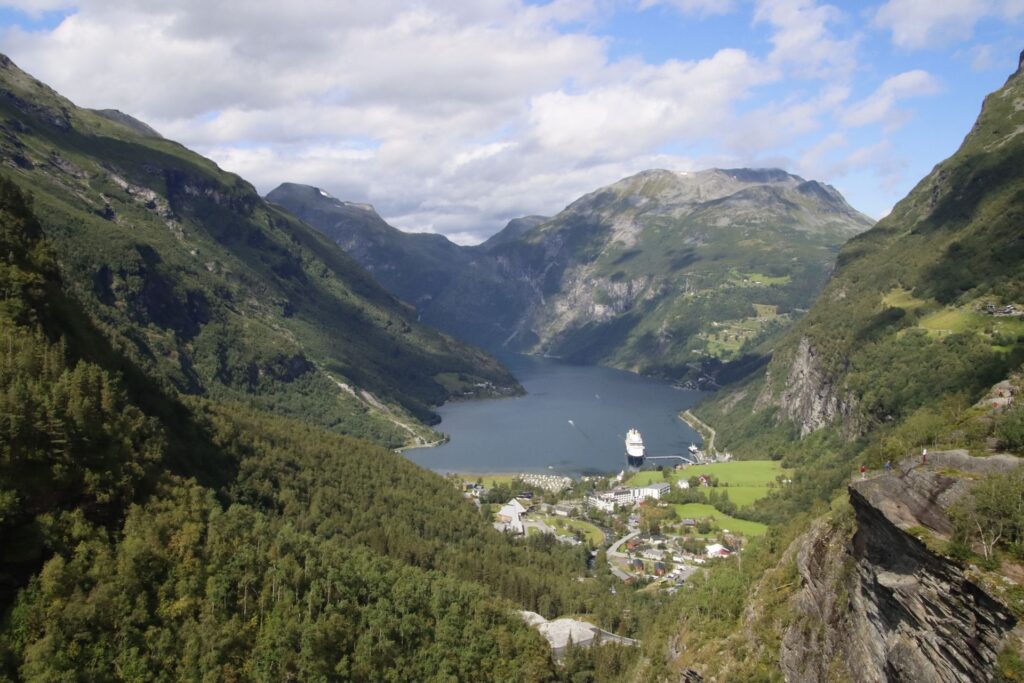
Everyone assumes Geiranger means a fjord cruise ticket priced like a small vacation on its own. It doesn’t have to. The village sits in a valley ringed by viewpoints, waterfalls, and hiking trails that cost nothing but a bit of legwork, and the fjord itself is visible — dramatically — from half a dozen free spots without ever stepping on a boat.
Why This Works
- Public viewpoints like Flydalsjuvet and Ørnesvingen (Eagle Road) offer postcard-perfect fjord panoramas at no cost.
- The Seven Sisters and Bridal Veil waterfalls are visible from the road and short pull-offs — no ticket required.
- Local hiking trails (Storseterfossen, Skageflå via the steep path) get you fjord-level and above-fjord views for free.
- A short local ferry or the public Geiranger–Hellesylt route costs a fraction of a multi-hour tourist cruise and covers similar scenery.
- Self-drive or hitching the Golden Route (Trollstigen–Geiranger) turns the journey itself into the main attraction.
- Camping or staying just outside the village (rather than in it) cuts accommodation costs significantly in peak season.
Practical Tips
- Best time of day: Arrive before 9am or after 5pm. Cruise ships dock mid-morning and dump thousands of passengers into the village center for a few hours — outside that window, the viewpoints and streets are noticeably calmer.
- Parking: The main village lots near the harbor charge a fee, especially in summer. Drive a little further up toward Flydalsjuvet or park near the church and walk down — roadside pull-offs along Fv63 are typically free and often have better views anyway.
- Avoiding crowds: Visit late May–early June or September. You’ll get long daylight hours, thinner crowds, and lower accommodation rates than peak July–August.
- Ferry vs. cruise: The public ferry between Geiranger and Hellesylt runs the fjord at a fraction of the cost of a dedicated sightseeing cruise, and you see the same waterfalls and cliffs from the water.
- What to bring: Layers (fjord weather flips fast), sturdy shoes for the Skageflå or Storseterfossen paths, a refillable water bottle, and cash/card for the odd honesty-box parking fee at trailheads.
- Photography timing: Midday sun flattens the fjord’s colors. Early morning or early evening light gives you the deep blues and greens you see in every brochure photo.
Why We Hunted This
A standard Geiranger fjord cruise, once you add parking, transfers, and the ticket itself, can easily run into serious money per person for a couple of hours on the water. That’s before food, before the drive, before anything else. For a family of four, that adds up to a genuinely uncomfortable chunk of a Norway budget — a country that’s already pricier than most European destinations.
The free viewpoints and short local ferry route deliver roughly 80% of the visual payoff for a fraction of the price. You’re not missing the fjord — you’re just not paying to be enclosed in a boat with a loudspeaker commentary for it. Combine the free lookouts with the public ferry and you can turn what might have been a triple-digit day per person into something closer to the cost of a nice dinner.
We hunted this route because Geiranger keeps showing up on “unmissable but overpriced” lists, and that reputation isn’t quite fair. The dramatic part — the fjord, the waterfalls, the switchback roads — was always free to look at. The cruise industry just built a very good business model around convincing people otherwise.
🏰 More European Escapes
- See all 30 free destinations in our World Index →
- ➔ Prague’s Best Free Viewpoints Over Charles Bridge (No Ticket Needed)
- ➔ Vienna on a Budget: Free Palaces, Gardens & Hidden Courtyards
- ➔ Budapest on a Budget: Free Thermal-Bath Views & Ruin Bars
- ➔ Barcelona Hidden Gems: Free Escapes From the Las Ramblas Crowds
- ➔ Free Things to Do in Amsterdam (Beyond the Canal Cruises)
- ➔ Santorini Hidden Gems: Free Sunsets Beyond Oia’s Crowds
- ➔ Dubrovnik City Walls Without the Crowds (Or the Full Price)