Last updated: 4 Sep 2026
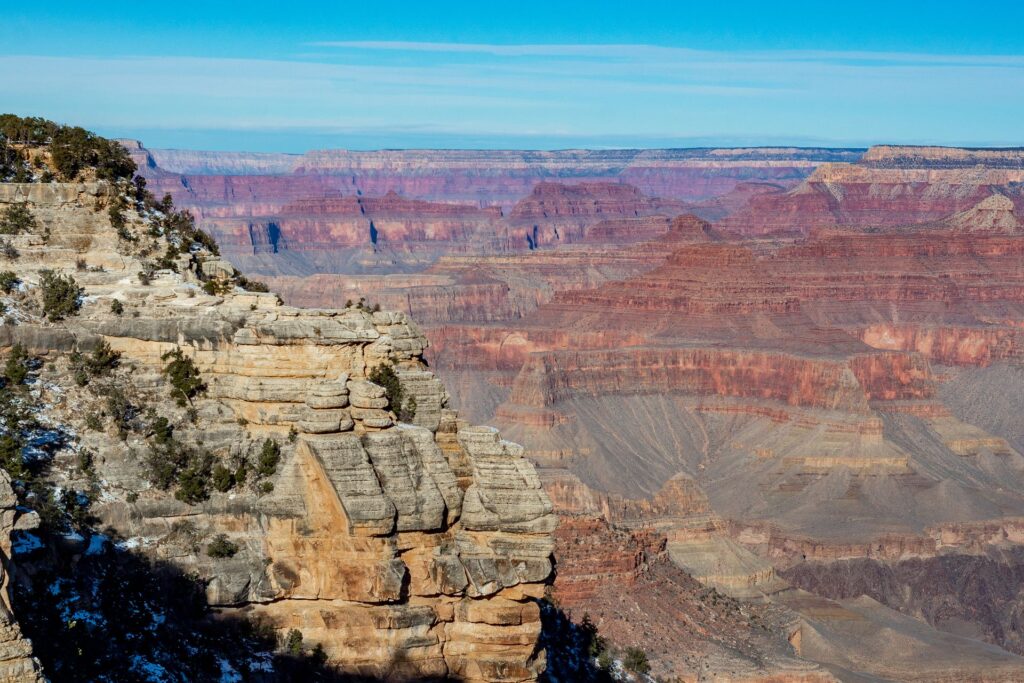
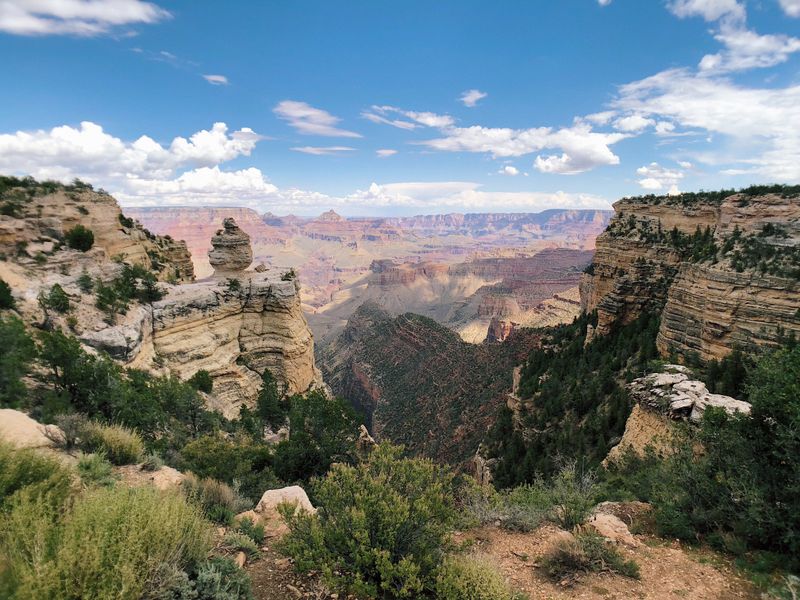
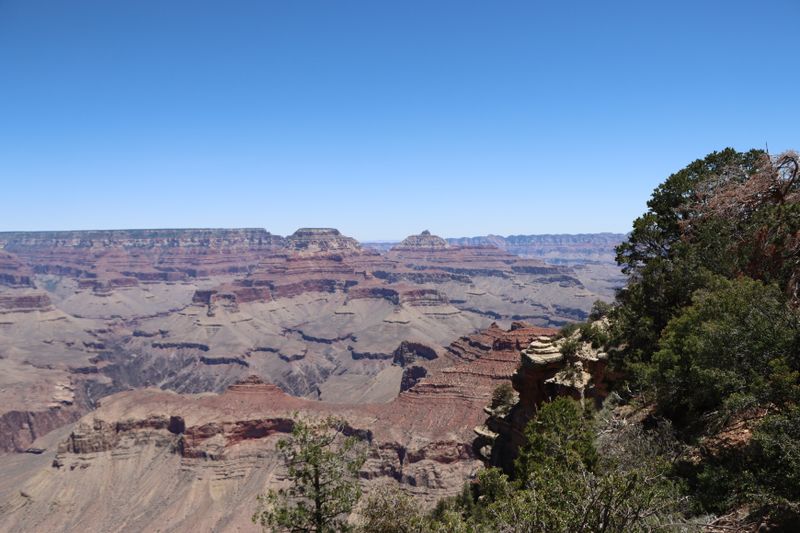
Everyone piles onto the paved overlooks near Grand Canyon Village, jockeying for the same selfie spot at Mather Point while a line of cars circles for parking. Just a short drive or an easy walk away, you can stand at the same rim, with the same mile-deep view, and have most of it to yourself — without spending a cent beyond what you’d already pay to enter the park.
Why This Works
- Once you’ve paid the park’s standard per-vehicle entrance fee (currently in the $30s and valid for seven days), every viewpoint inside the park is free to visit — there’s no extra “premium overlook” charge anywhere on either rim.
- Desert View Drive (Highway 64), the 25-ish mile road linking Grand Canyon Village to the East Entrance, stays open to private vehicles year-round and strings together several roomy, under-visited overlooks: Grandview Point, Moran Point, Lipan Point and Navajo Point.
- Shoshone Point, a short and mostly flat unpaved walk off Desert View Drive, leads to a dramatic unfenced promontory that many guidebooks skip entirely — and it’s completely free with no permit needed unless you’re hosting a wedding there.
- Yaki Point and the South Kaibab Trailhead are only reachable by the free park shuttle or on foot/bike, which naturally filters out the tour-bus crowds that clog Mather and Yavapai Points.
- The in-park shuttle system (Village Blue Route, Kaibab Rim Orange Route, and the seasonal Hermits Rest Red Route) is free to ride and covers most of the South Rim’s best viewpoints without you needing to hunt for parking.
- Several times a year the National Park Service waives the entrance fee entirely on designated fee-free days, so with good timing you can do all of this without paying anything to get in.
Practical Tips: Timing, Crowds & What to Bring
- Best time of day: Arrive at sunrise or in the last hour before sunset. Lighting is best for photos then, and the tour buses haven’t arrived (or have already left).
- Avoiding the parking scrum: Grand Canyon Village lots fill fast by mid-morning. Desert View Drive’s pull-offs rarely do — there’s simply less foot traffic that far east.
- Finding Shoshone Point: Look for the unmarked gravel pull-off between the Village and Desert View (there’s no big sign on purpose). It’s roughly a mile each way through ponderosa forest to the rim.
- Skip the car for Yaki Point: Private vehicles aren’t permitted on this spur road at all — hop the free Orange shuttle instead, which also drops you at the South Kaibab Trailhead for short, quiet rim walks.
- Check seasonal road rules: Hermit Road is typically closed to private cars for much of spring through fall, so that stretch requires the free Red shuttle rather than your own vehicle.
- Pack in advance: Water, sun protection and layers — the rim sits over 7,000 feet up, so mornings can be cold even in summer. There are no railings at spots like Shoshone Point, so keep an eye on kids and pets.
- Look up fee-free dates: The NPS publishes a handful of no-entrance-fee days annually (around the agency’s anniversary, a Martin Luther King Jr. Day weekend, the start of National Park Week, and similar occasions) — worth checking before you plan your trip.
Why We Hunted This
Most Grand Canyon guides send you straight to the same three or four South Rim overlooks, which means you’re paying full park admission to stand shoulder-to-shoulder with a hundred other visitors. The quieter alternatives cost nothing extra — you’re simply redirecting a car ride or a mile-long walk toward a different patch of the same rim.
Factor in what a lot of travelers spend anyway on guided overlook tours or shuttle add-ons from nearby Tusayan hotels, and skipping those in favor of the park’s own free shuttle routes and a self-driven loop down Desert View Drive can plausibly save a family somewhere in the range of a modest chunk of their daily trip budget — money better spent on gas, snacks, or that Grand Canyon mule ride you’ve been eyeing.
It’s also just a better experience. Crowded viewpoints make it hard to linger, and rangers will tell you the canyon reveals more the longer and quieter you sit with it. Free doesn’t have to mean lesser here — in this case, free is arguably the upgrade.
See all 30 places you can visit for free — our World Index →
Frequently Asked Questions
Is the Grand Canyon free to visit?
No – there is a standard per-vehicle park entrance fee (currently in the $30s, valid for seven days), but once inside, every viewpoint on both rims is free with no extra charge.
Is parking free at the Grand Canyon?
Parking itself is not charged separately once you have paid the park entrance fee, and the free in-park shuttle system covers most of the South Rim's best viewpoints without needing to find parking at all.