Last updated: 4 Sep 2026
Hanoi’s Old Quarter and Ha Long Bay show up on every “bucket list” itinerary, but you don’t need a bottomless travel budget to see the best of either. Between free viewpoints, motorbike-only bridges, and a mountain path that locals use more than tourists, you can piece together a full day of postcard views in Hanoi and on the bay without paying for a single “skip the line” ticket. Here’s how we’d do it if we were watching every dong.
Why This Works
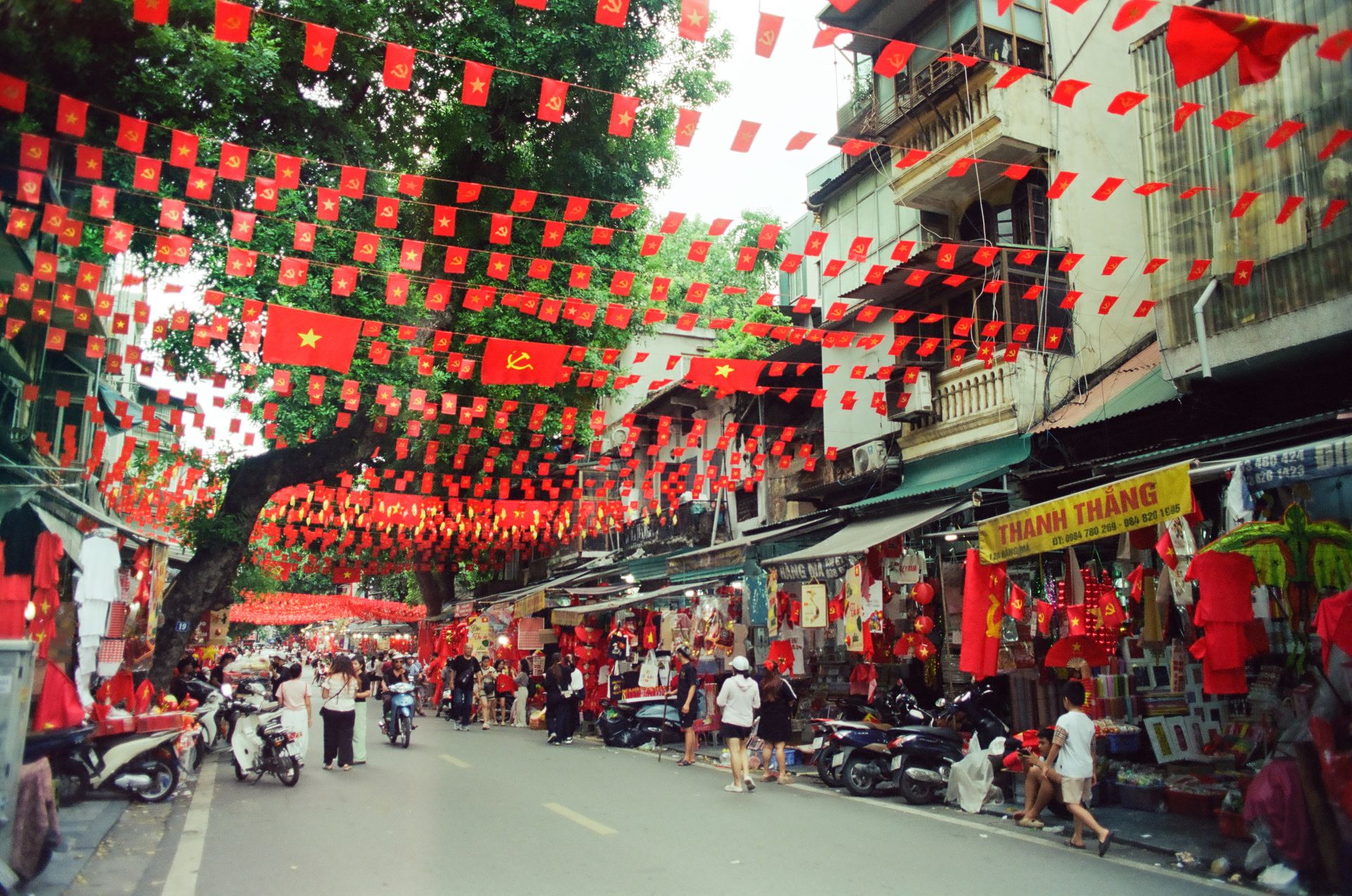
- Hanoi’s Old Quarter is a free, walkable maze — no entry gate, no timed ticket, just 36 streets to get lost in.
- Long Bien Bridge is closed to cars, so there’s no toll or parking fee — just walk or ride a motorbike out onto the old steel span for a free river sunset.
- Tran Quoc Pagoda, one of Vietnam’s oldest Buddhist temples, sits on the edge of West Lake and doesn’t charge admission to wander the grounds.
- Train Street no longer offers casual walk-through access, but the “cost” of seeing a train squeeze past shuttered windows is really just the price of one drink at a café that’s been licensed to host viewers.
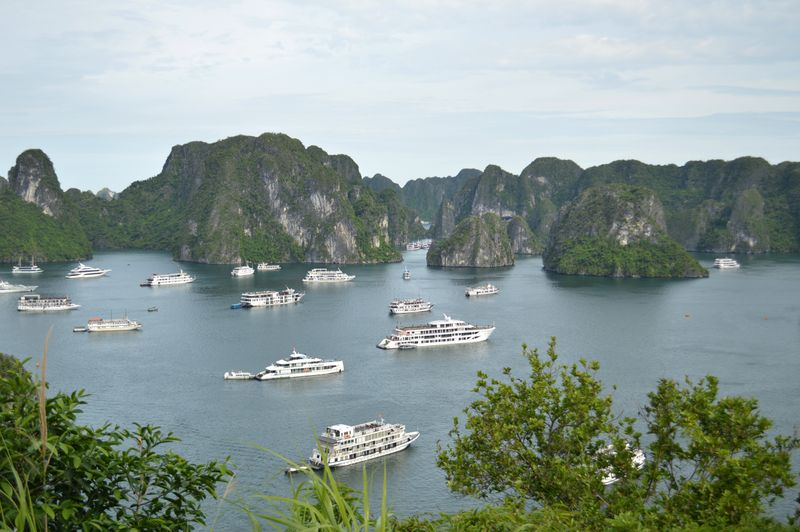
- On Ha Long Bay, a short, free hike up Bai Tho (“Poem”) Mountain in Ha Long City gets you a panoramic bay view that rivals what people pay for at the cable car complex nearby.
- A shared day-boat with the mandatory sightseeing fee baked into the ticket price still gets you the same karst-and-cave scenery as a private charter, just without the markup.
Best Time, Crowds, and What to Bring
- Best time of day in Hanoi: Go before 7am for the Old Quarter and Dong Xuan Market area, when produce vendors set up and the alleys feel like a working neighborhood rather than a photo op. Head back out around golden hour for Long Bien Bridge and the West Lake shoreline.
- Best time for Ha Long Bay: Mornings tend to have calmer water and softer light for photos; afternoons can get hazier. Weekday sailings are generally quieter and a touch cheaper than weekend departures.
- Avoiding queues: Skip Vietnamese public holidays and Tet, when both bay tours and Old Quarter foot traffic spike and boats fill up fast. Arriving right at opening or in the last hour before closing at any paid sight thins the crowd noticeably.
- Parking: If you’re on a rented motorbike in Hanoi, use a signed, guarded lot rather than leaving it on the street — it’s a small flat fee and avoids the risk of a fine or your bike being moved. Around Long Bien Bridge, free roadside space is usually easy to find since cars can’t cross anyway.
- What to bring: Small-denomination cash for tiny temple donations or a coffee-alley drink, comfortable shoes for cobblestones and the Bai Tho Mountain steps, and a light rain layer — Hanoi’s weather flips fast.
Why We Hunted This
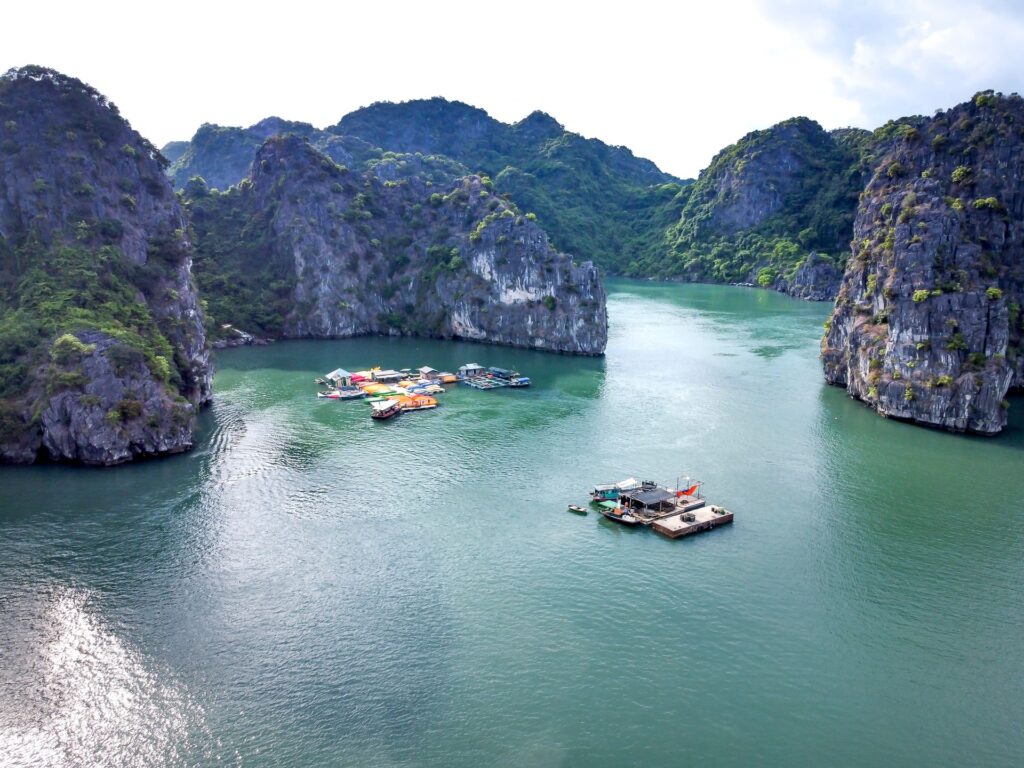
Ha Long Bay day trips are sold in every price bracket, and it’s easy to assume the pricier boat is the only way to “see” the bay properly. In reality, the scenery — limestone karsts, floating fishing villages, emerald water — is the same whether you’re on a shared deck or a private charter; the extra spend mostly buys you buffet lunch, kayaking add-ons, and elbow room. Pairing a modest shared cruise with a free mountain viewpoint on land can trim a noticeable chunk off what a fully loaded package tour would cost.
In Hanoi, plenty of walking tours charge for exactly what we’re describing here: a guide leading you through “hidden alleys” you could just as easily find yourself with an offline map and a slow morning. Skipping the guided version and using that budget instead for a proper bowl of bun cha or a rooftop egg coffee is, dong for dong, a better trade.
None of this requires sneaking past anyone or dodging a fee that’s legitimately owed — the temples, bridges, and mountain paths mentioned here are genuinely open to the public. The savings come from knowing which views are already free and which paid extras are optional rather than essential.
🌏 More Asia Travel Guides
- See all 30 free destinations in our World Index →
- ➔ Bangkok Hidden Gems Away From Khao San Road (Mostly Free)
- ➔ Kyoto on a Budget: Free Bamboo Groves & Hidden Temples
- ➔ Tokyo’s Free Hidden Gems: Temples & Viewpoints Beyond Shibuya
- ➔ Bali on a Budget: Free Waterfalls & Rice-Terrace Views
- ➔ Singapore’s Free Hidden Gems: Beyond Marina Bay Sands
- ➔ Skip the Sunrise Crush: A Private Angkor Wat Tour Worth the Splurge
- ➔ Mount Batur Sunrise Trek: Why a Private Guide Is Worth It
Frequently Asked Questions
Is Hanoi's Old Quarter free to explore?
Yes – it is a free, walkable maze of streets with no entry gate or ticket needed.
Is there a free viewpoint over Ha Long Bay?
Yes – a short hike up Bai Tho (Poem) Mountain in Ha Long City gives a panoramic bay view for free, rivaling the paid cable car complex nearby.